ESWT for calf extensibility
The Physical Therapy Clinic · Shockwave therapy by condition
Written by Andy Roberts, BSc Hons, MSCP · Physiotherapist, Co-owner
Extracorporeal Shockwave Therapy (ESWT) and calf muscle extensibility
Extracorporeal Shockwave Therapy (ESWT) is an evidence-based treatment used in physiotherapy and sports medicine to improve tissue healing, reduce pain and enhance muscle and tendon function. ESWT is increasingly used to improve calf extensibility in patients experiencing calf tightness, reduced ankle mobility, muscular stiffness, Achilles tendon problems and lower limb overuse injuries.
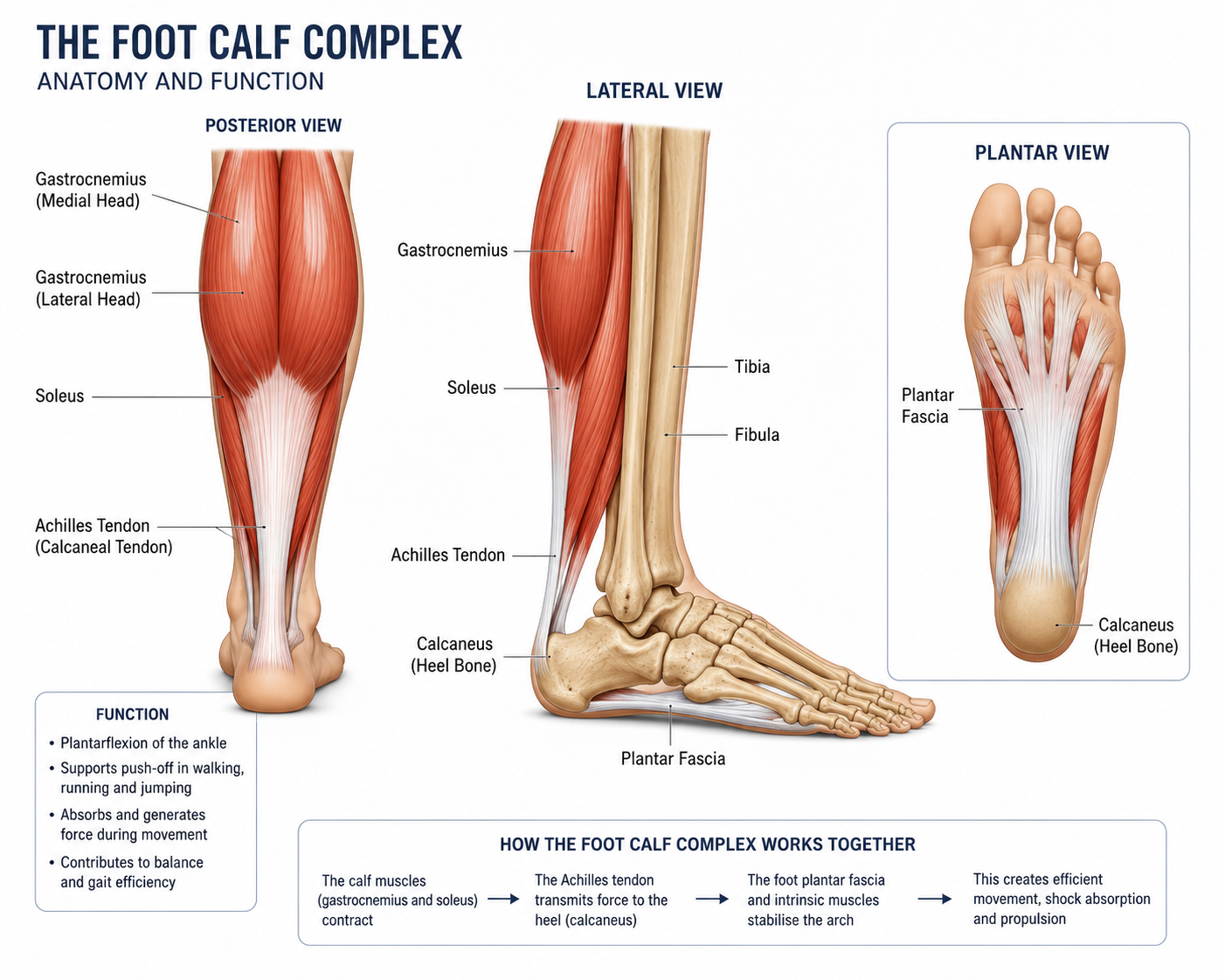
Calf extensibility refers to the ability of the calf muscles, primarily the gastrocnemius and soleus, to lengthen effectively during movement. Reduced calf flexibility can contribute to a variety of musculoskeletal conditions including Achilles tendinopathy, plantar fasciitis, shin splints, ankle stiffness, recurrent calf strains and altered walking or running mechanics.
What causes reduced calf extensibility?
Tight calf muscles can develop due to several factors including:
- Repetitive sporting activity
- Running and jumping sports
- Prolonged standing
- Poor footwear
- Previous calf injuries
- Achilles tendon disorders
- Reduced ankle mobility
- Sedentary lifestyles
- Scar tissue formation
- Muscle overuse and fatigue
- Neuromuscular tension
Calf tightness can lead to excessive strain on the Achilles tendon and foot structures, reducing overall lower limb efficiency and increasing injury risk.
How does ESWT improve calf extensibility?
ESWT works by delivering acoustic pressure waves into the calf muscles and surrounding tissues. These shockwaves stimulate a number of physiological responses that can improve calf flexibility and tissue mobility.
Increased blood flow. ESWT promotes neovascularisation, the formation of new blood vessels. Improved circulation enhances oxygen delivery and tissue nutrition, helping tight muscles relax and recover more efficiently.
Reduction in muscle tone and stiffness. Shockwave therapy can reduce excessive muscle tension and decrease myofascial tightness within the calf complex. This can improve tissue elasticity and allow the muscle to lengthen more effectively.
Stimulation of tissue remodelling. ESWT stimulates cellular activity and collagen remodelling within muscles, tendons and fascia. This can help improve tissue quality and reduce chronic stiffness.
Pain reduction. Pain often causes protective muscle guarding and restricted movement. ESWT can reduce pain by affecting local nerve endings and reducing chronic inflammation, allowing improved calf stretching and mobility.
Improved ankle range of motion. As calf extensibility improves, ankle dorsiflexion commonly increases. Better ankle mobility can improve walking, running, squatting and sporting performance.
Conditions that may benefit from ESWT for calf tightness
- Achilles tendinopathy (insertional and mid-portion)
- Calf muscle strains
- Chronic calf tightness
- Plantar fasciitis
- Shin splints
- Running injuries
- Reduced ankle dorsiflexion
- Sports-related muscle stiffness
- Post-injury scar tissue
- Lower limb overuse injuries
ESWT combined with physiotherapy
Research suggests that ESWT is most effective when combined with a comprehensive physiotherapy programme. Treatment may include calf stretching exercises, strengthening programmes, eccentric loading exercises, soft tissue therapy, biomechanical assessment, running analysis, footwear advice, mobility exercises and sports rehabilitation.
Combining ESWT with rehabilitation exercises can help improve long-term calf flexibility and reduce recurrence of symptoms.
What does ESWT treatment feel like?
During ESWT treatment, a handheld device delivers shockwaves to the calf muscles and surrounding tissues. Patients may feel a tapping or pulsing sensation during treatment. Sessions are typically short and most patients tolerate the procedure well. Some mild soreness can occur after treatment but this usually settles within 24 to 48 hours.
How many ESWT sessions are needed?
The number of sessions varies depending on the severity and duration of symptoms. Many patients benefit from a course of 3 to 6 treatments combined with an exercise-based rehabilitation programme.
Benefits of ESWT for calf extensibility
- Non-surgical treatment
- Evidence-based therapy
- Improves calf flexibility
- Enhances ankle mobility
- Reduces muscle tightness
- May improve sporting performance
- Can reduce pain and stiffness
- Supports rehabilitation
- Minimal recovery time
- Suitable for chronic conditions
Is ESWT effective for calf tightness?
Current evidence suggests that ESWT can be an effective treatment option for improving calf muscle extensibility, reducing muscular stiffness and assisting recovery from lower limb overuse injuries. A full physiotherapy assessment is recommended to determine whether ESWT is appropriate and to identify any underlying biomechanical or muscular factors contributing to calf tightness.
ESWT treatment at The Physical Therapy Clinic
At The Physical Therapy Clinic, ESWT treatment is combined with expert physiotherapy assessment and rehabilitation to help improve calf extensibility, reduce pain and restore lower limb function.
For more information about ESWT for calf tightness, Achilles problems or sports injuries, contact The Physical Therapy Clinic on 01604 630636.