
What actually happens when a disc prolapse in your back leads to a diagnosis of sciatica?
27 January 2026
Written by Andy Roberts, BSc Hons, MSCP · Physiotherapist, Co-owner
Just remember: sciatica is not a diagnosis. It is a symptom of your sciatic nerve being compressed by something.
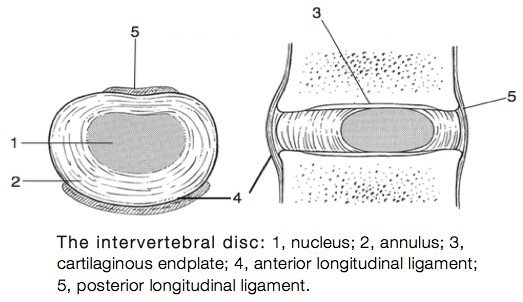
This is a simple drawing, in plan and side view, of a healthy disc sat between two vertebrae, with the longitudinal ligaments in place at the front and the back of the disc.
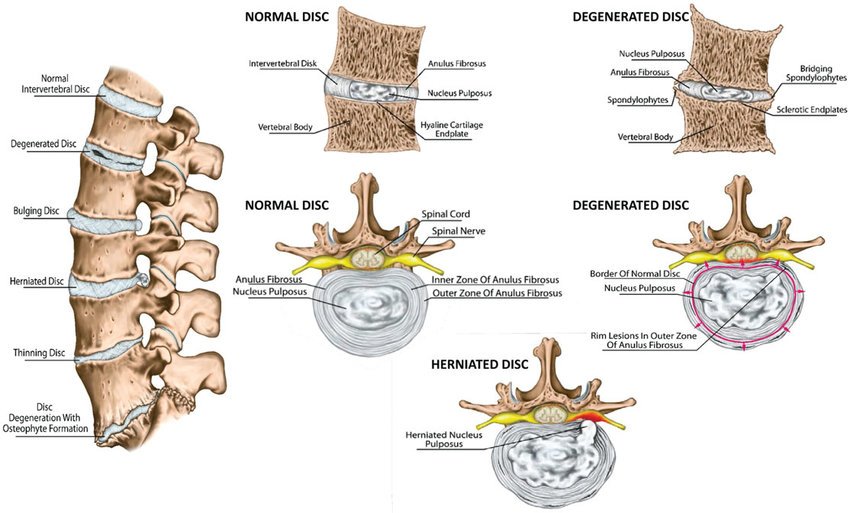
Above is a good diagram that highlights the disc in its correct position, identifying the difference between a healthy disc and a degenerated disc. The yellow indicates the peripheral nerves coming out from the spinal cord. Note that in the healthy disc picture the peripheral nerves are not touching anything, but in the degenerative disc picture the disc is touching the nerve.
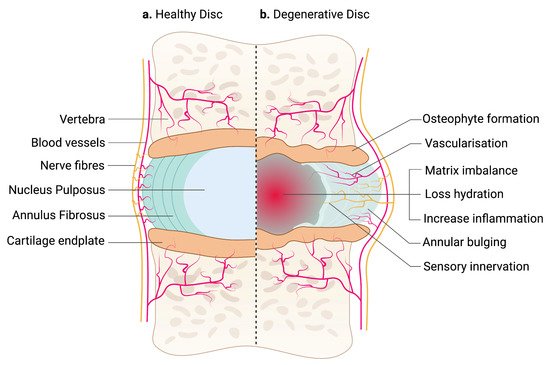
Above is a good example of what happens when a disc degenerates and starts to lose its integrity and structure. At this point it is often the case that people experience low back ache and pretty much ignore it.
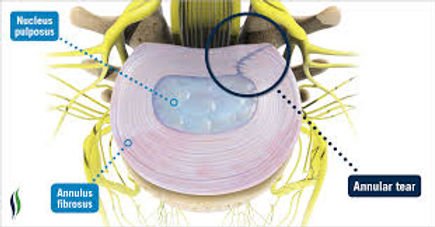
If the degeneration is allowed to continue, then ultimately an annular tear can form, as shown above.
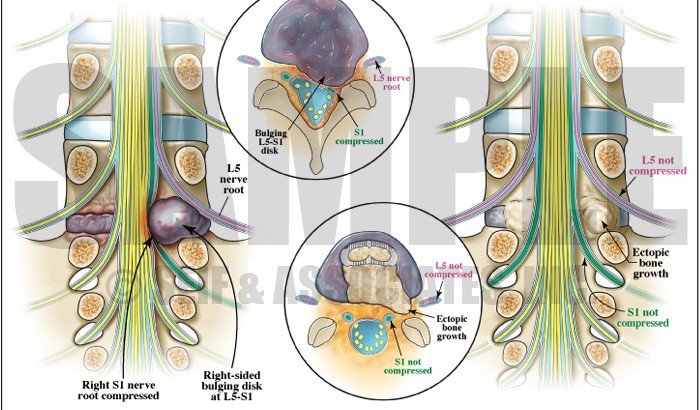
From the annular tear a prolapse or herniation can occur and, as you can see above on the left, a nerve root can be compromised.
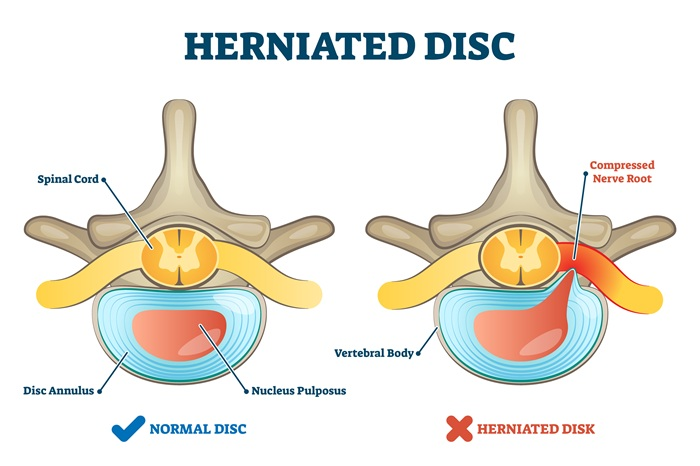
This is a good illustration showing a disc herniation which has compromised the nerve root.
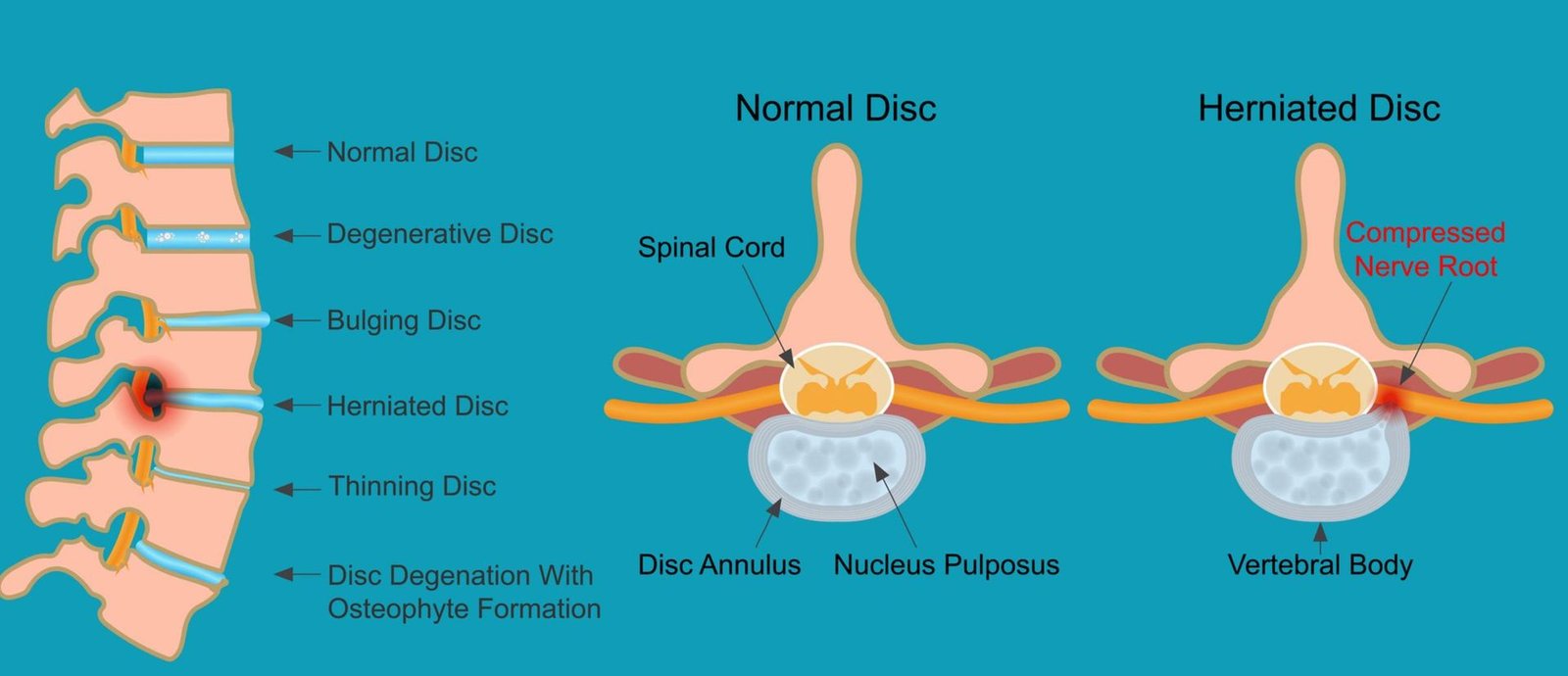
If the compromised nerve root is one of the nerve roots that makes up the sciatic nerve, then here is your diagnosis: sciatica has occurred as a consequence of the nerve root being compressed.
This is a very simple overview of why you may be having pain or pins and needles in your leg, and pain in your back.
If a bulge or herniation occurs in the centre of the disc at the back, then this could result in central cord compression, which is far more serious. That explanation is for another day.
Thanks for reading.